
Carlo Bugatti and the Art of the Unexpected Chair
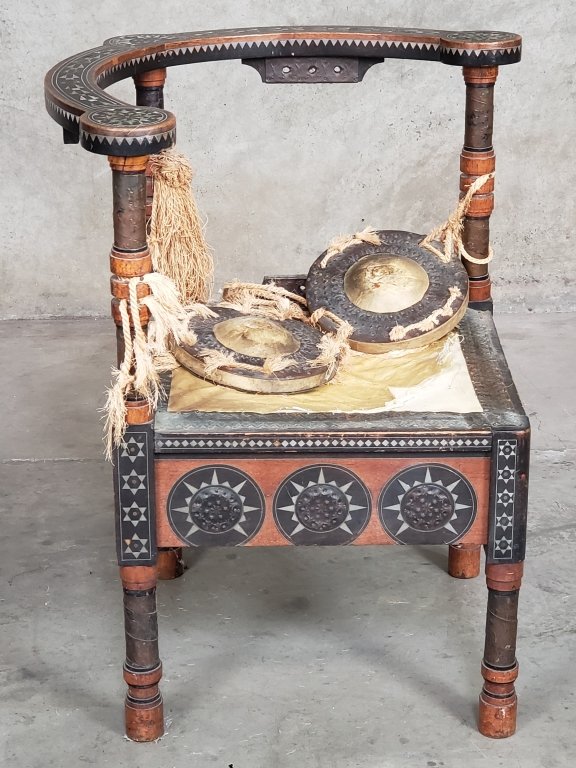
At Orrill’s Auction, we handle a wide range of furniture, from traditional antiques to modern design, but every so often a piece comes through that does not fit neatly into any category. This corner chair, attributed to Carlo Bugatti, is one of those pieces.
It is not just furniture. It is design with a point of view.
Carlo Bugatti was active during the late 19th and early 20th centuries, around the same time as the Art Nouveau movement. While many designers of that period focused on flowing organic lines and nature inspired forms, Bugatti went in a completely different direction.
His work is often described as eccentric, but that does not quite capture it. Bugatti combined influences from North African, Middle Eastern, and European design traditions into something entirely his own. He treated furniture less as a purely functional object and more as a sculptural medium.
The result is a body of work that still feels unusual, even by today’s standards.
Once you know what to look for, Bugatti’s design language becomes very recognizable.
Mixed materials such as wood combined with vellum, treated leather, metal, and sometimes bone
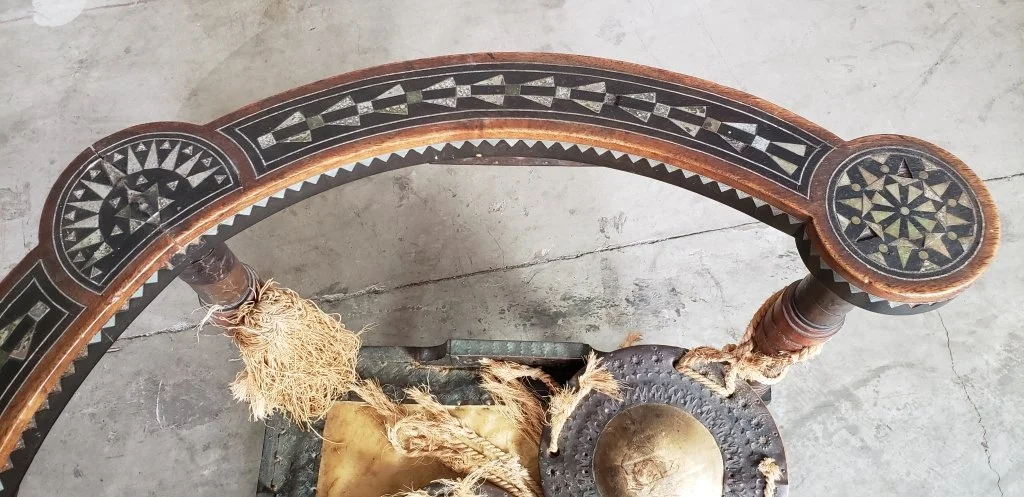
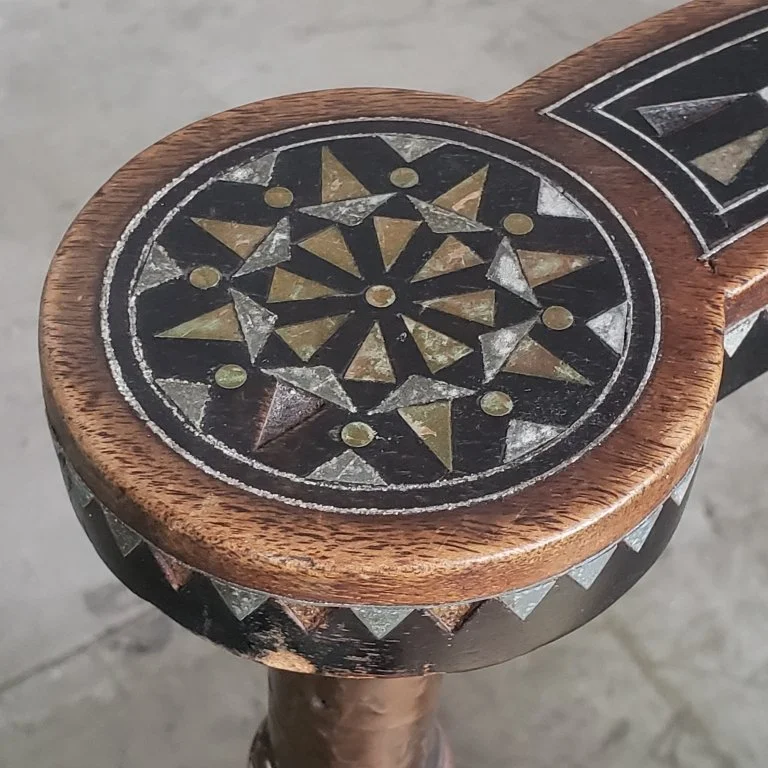
Geometric decoration with bold patterns rather than subtle ornament
Tassels and fringe that add movement and texture
Architectural structure where pieces feel assembled rather than traditionally carved
Unusual forms including corner chairs, asymmetrical layouts, and circular elements
These features were intentional. Bugatti was creating objects that stood apart from traditional European furniture.
This corner chair currently in our auction reflects many of those defining characteristics.
The walnut frame is decorated with inlaid geometric motifs, giving it a strong visual rhythm across the surfaces. The circular elements, likely vellum panels with metal bosses, are a hallmark of Bugatti’s work and add both texture and contrast. The tassels and textile components introduce a softer, almost theatrical element that breaks up the rigidity of the structure.
Even the form itself is unconventional. Designed to sit into a corner, the chair interacts with the surrounding space rather than simply occupying it. This aligns with Bugatti’s approach, where furniture was often part of a larger interior composition.
It is not a background piece. It is meant to be noticed.
Carlo Bugatti’s work has held long term interest among collectors for a few key reasons.
Distinctiveness because his style is immediately recognizable and difficult to replicate convincingly
Cross category appeal that attracts both furniture collectors and design or art collectors
Sculptural quality where many examples function as display objects as much as usable furniture
Historical relevance as his work represents a break from traditional European design conventions
Because of this, Bugatti pieces often perform well at auction, particularly when they retain their original materials and decorative elements.
Most furniture is designed to blend into a room.
This chair does the opposite.
Whether placed in a corner as intended or used as a standalone focal point, it carries a strong visual presence. It reflects a period when designers were experimenting, pushing boundaries, and redefining what furniture could be.
For collectors, that is where the value lies. Not just in age or materials, but in originality.
If you would like to take a closer look at this piece, you can view it here
https://orrillsauction.hibid.com/lot/295586295/attributed-to-carlo-bugatti-walnut-corner-chair
If you have questions about this piece or others in the auction, feel free to reach out.